Chanel are famous for their tactile woven tweed fabrics, developed every season in collaboration with woven textile manufacturers. They often explore new fibres and new yarn design and composition to update and reinvigorate the traditional tweed, emphasising its sumptuous texture.
In the Autumn 2013 ready-to-wear collection the fabrics defied comprehension, anything that looked woven very well could’ve been an artful web of embroidery, like the explosions of monochrome flowers toward the end of the show.
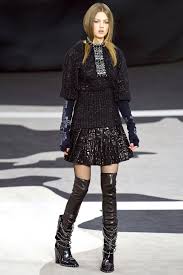
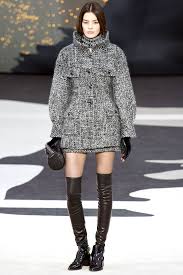

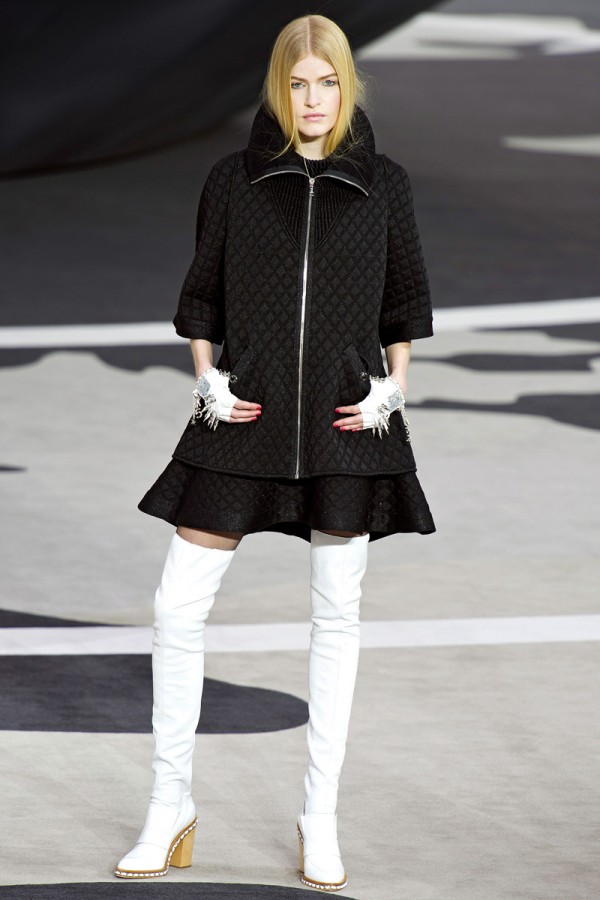
Another well known item by Chanel is the infamous two-piece tweed suit that was made in the 1920’s and is still a famous piece today. The classic Chanel suit was made by millions of international fashion figures, like Princess Diana, Jackie Kennedy, and become a representation of the liberated women. https://www.crfashionbook.com/fashion/a26551426/history-of-chanel-tweed-suit/
The fabric was not only inspired by menswear, but also by a man. Chanel borrowed sportswear from her “beau” and realised that the comfortable supple fabric had a very sophisticated quality and starting designing garments around it. The tweed trend spread like wildfire, and quickly popular throughout the couture houses of Paris. In the 1930’s Coco Chanel started combing it with wool, cotton, silk, and even cellophane to give a more high-fashion and light-weight style. Karl Lagerfeld, still uses tweed throughout the brand, just as Coco Chanel would’ve wanted. https://www.elle.com/fashion/news/a15402/the-story-of-chanels-tweed/
Japanese designer Issey Miyake is particularly famous for his use of technology in textile creation. His Pleats Please line uses a heat-set pleating technique to create very finely pleated surfaces; giving his garments dynamic and dramatic texture and form.
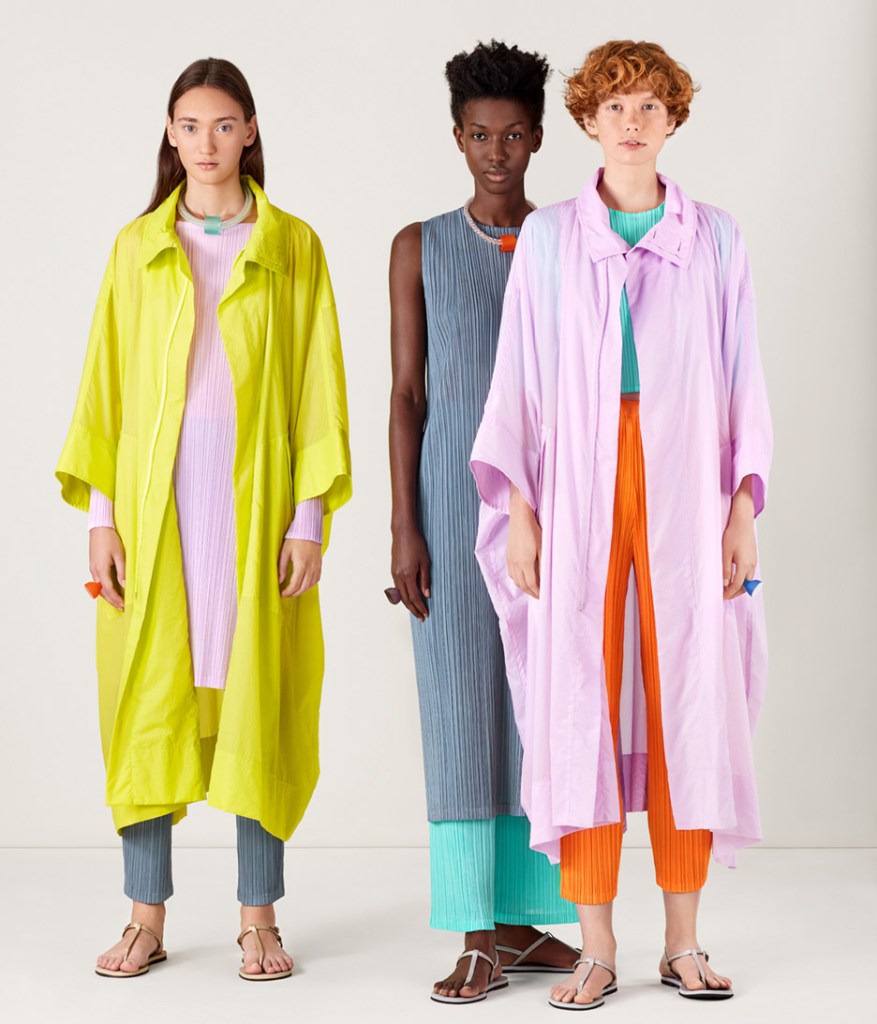
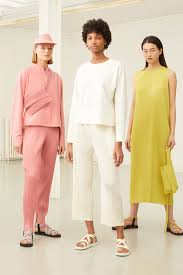
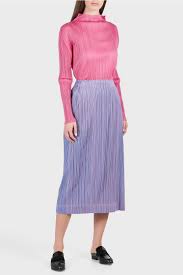

He broke the boundaries between East and West and pursued “the body, the fabric covering it and a comfortable relationship between the two” as a fundamental concept, which was both shocking and resonating with people. https://www.isseymiyake.com/en/brands/isseymiyake
In 1994 and 1999, Miyake turned over design of the men’s and women’s collections, to his associate, Naoki Takizawa, so that he could return to research full-time. In 2007, Takizawa opened his own brand supported by the Issey Miyake Group. https://en.wikipedia.org/wiki/Issey_Miyake
 OCA Art Blog