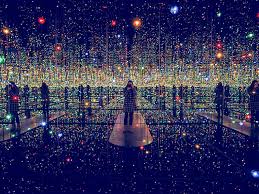
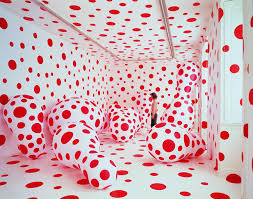
Kusama applies some of the language of textiles to her infinity mirrored room. Concerns of pattern, colour, and repletion dominate the work; these are the tools of the surface designer particularly in printed textiles.
Repetitive elements help create an immersive environment. The repetitions of the same dot motifs on walls, ceilings and 3D forms means the viewer is completely embedded into the environment and print. Kusama uses textiles as a substrate onto which she adds colour and pattern to generate the obsessive environment she seeks.
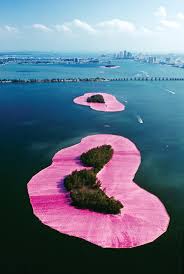
No artists have textiles on the scale with the same impact as Christo and Jeanne-Claude. Surrounding Islands sees textiles used on an extremely large scale to both define and cover aspects of the natural environment.
Known for their wrapping of the Reichstag in Berlin and the Point Neuf in Paris. As seen above.
The third image is their Wrapping Trees project, it was done as an effective means to temporarily transform and define the trees.
“The “wrapping” is NOT at all the common denominator of the works. What is really the common denominator is the use of fabric, cloth, textile. Fragile, sensuous and temporary materials which translate the temporary character of the works of art”
178 trees were wrapped in woven polyester fabric, which is a fabric used in Japan every winter to wrap around trees to protect them from frost and heavy snow. The wrapping both hides and draws attention to the forms inside.
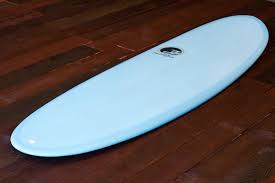
Where I live I am able to go surfing, and so my surf board is made from fibreglass. Not all surfboards are made from fibreglass others are also made of Epoxy.
Fiberglass surfboards can have better flex out in the waves than an epoxy surfboard, but are easier to damage.
Fiberglass boards are better at catching waves, perform smoother, and are better harder and stiffer. In my personal opinion these boards are a lot better then Epoxy boards.
How a Fibreglass Surfboard is Made?
A fibreglass surfboard involves a significant amount of hand shaping in both the preparation of the core or polyurethane foam blank, and the final sanding to get the finished product just right.
The blank is shaped as far as possible to the board’s specifications and a piece of wood is incorporated into the middle of the blank for added stiffness and durability. The blank is then covered with a fibreglass cloth and laminated with polyester resin. The board is left for a while to allow the resin to set, and then the board is sanded to the final form.
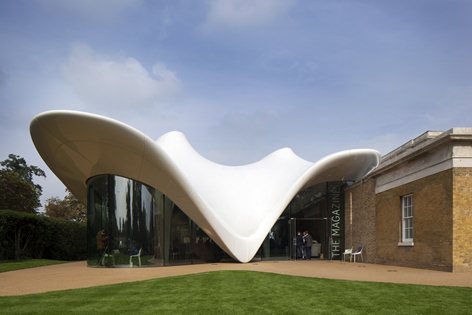
This is made from glass-fibre material used to create the main woof and body of the building has been manipulated to the fluid shapes desired by the architect.
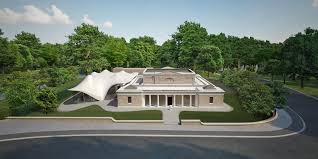
Textiles are being applied more and more often into architecture to create new and interesting textures. Hadid’s extension uses materials, shape and form that contrast with the gallery’s original classical building, making the addition of this new structure a transformative one.
Full Size
Zaha Hadid’s architecture is counted as taking the old to the new because as you can see Hadid’s architecture is a more modern part of the Serpetine Sackler Gallery.
Textiles as a discipline is unusual in that the textile is rarely the end product, but rather becomes part of a further making process. i.e. fashion, interior, installation, furniture, sculpture, architecture, product, automotive, etc.
Textiles may be created specifically to fulfil the needs or demands of specific contexts. a design may work to a brief to develop a durable textile in a specific colour palette for seating on public transport.
A textile may also exist already and be selected to meet a particular end use. Fashion designers and brands often build their garment collections after seeing textiles presented by manufacturers at specialist trade shows.
Main Qualities:
ART or DESIGN: Consider the intention of the textiles. Do they serve commercial design outcomes, are they being used within a functional context, or are they presented as works of art?
TEMPORARY of PERMANENT: Is the installation or placement of the textiles intended to be temporary, or do they form part a long-term or permanent structure?
LARGE SCALE or SMALL SCALE: Do you perceive the overall scale to be large or small? Think about how you might relate to the work in its context.
TRANSFORMING and/or DEFINING and/or FORMING: How do the textiles work to change the context they are placed within? Do they TRANSFORM an existing space or place? Do they function to DEFINE or perhaps emphasise a place or space in some ay? Do the textiles FORM their own shape, space or place? Or do they do more than one of these?
IMMERSIVE and/or DISTANT: Are the textiles made to be experienced close-up and in an IMMERSIVE way? Perhaps they’re designed to be touched or the viewer is placed within a textile environment. Or are they viewed form a DISTANT location?A distant location could be from across a room- or from a plane in the sky.
PATTERN and/or COLOUR and/or REPETITION and/or SHAPE: These four qualities are key factors in the design and creation of textiles. Consider if they’re dominant or important in the context the textiles are placed in. These qualities are by no means exhaustive, but should be a starting point for you to analyse the contexts of the works that follow.
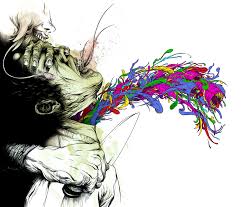
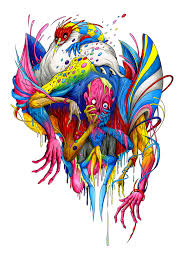
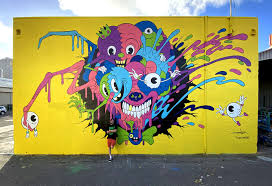
Alex Pardee is a freelance artist, apparel designer, and comics creator writer. I find his work incredibly unique and interesting, he is one of my favourite artists and I am always inspired and drawn to his work.
His craft is comic book artwork, he creates murals, as well as comic books, and poster type pieces. He used mediums such as pens, inks, dyes, watercolours, and is trying to use more and more acrylics, oils, and latex.
To an extent Alex Pardee’s work does adhere to the ideas of Slow Design, because as he is a freelance artist he is able to take his own risk when he works, experiment and is able to, and very much is very open about he creates his pieces from start to finish, with added pictures as added proof.
On Alex Pardee’s blog is explains in depth his entire process of how he ended up creating this piece and states that is was “rollercoaster ride of emotions” making this piece. In his blog he also explains every big piece he creates, as well as how he chooses to create his clothing pieces and tries to get his audience involved in his work, showing how transparent he is.
I believe Alex Pardee’s story is important and it is very important for an artist to be very open about their process when creating a piece which Pardee is. In addition, on his website in the about section he opens up a lot about what inspires him, which had always been a question that gave him struggle to answer correctly and honestly. After reading what inspires him and his explanation about himself I personally find it very interesting and connect to what he say highly.
Yes I do value craft and craftsmanship because I believe it makes the pieces/products a lot more interesting and unique when we know how they were created and what the story behind them and creator(s) are.
I don’t know if there is enough space in modern society to have craft, because in a way mass-production is a lot easier for the people living in the modern society, and it would be very complicated to have modern society convert all their ideals and choices only because craft was better for society.
A hands-on approach to designing allows designers, makers, and artists to experience directly the qualities of the materials and understand how they can be manipulated or transformed; this in turn allows for risk-taking and innovation.
“workmanship of risk” individual production, unpredictable/risky, production by a skilled person(s).
“workmanship of certainty” mass production, predictable, production by a system.
Many designer and artists as they grow will begin to more from on form of workmanship to another, whilst others choose to keep their products hand-made.
Craftmanship and Quality
Quality is perceived to come from craftsmanship and mastery of a craft. Hand-woven textiles demand a high level of skill and one which is highly regarded, perhaps even more so when the designer is also the maker/weaver.
Ptolemy Mann is a designer/artist/maker who not only has mastered weaving, but also demonstrates mastery of colour, placement, and composition. Her precise execution and time-heavy means of construction add value and integrity to her work, marking her out as a sought-after textile designer and colourist.
If you look closely at her work you can see tiny imperfections/flaws in the hand-weaving and hand-dyeing of the yarn, which adds further proof that she did do the pieces herself.
This reverence for craftsmanship cuts across textile disciplines and also into working with other materials including, wood, glass, metals, paper, and ceramics and sets apart the strongest designer/makers.
Design for the narrative:
As well as understand how the products were produced, there is a increasing desire to also know the story behind the creator of the piece. Which is completely contradictory to the mass-production method where the products come from completely anonymous workers, and not knowing anything about them, only the line in which the product came from.
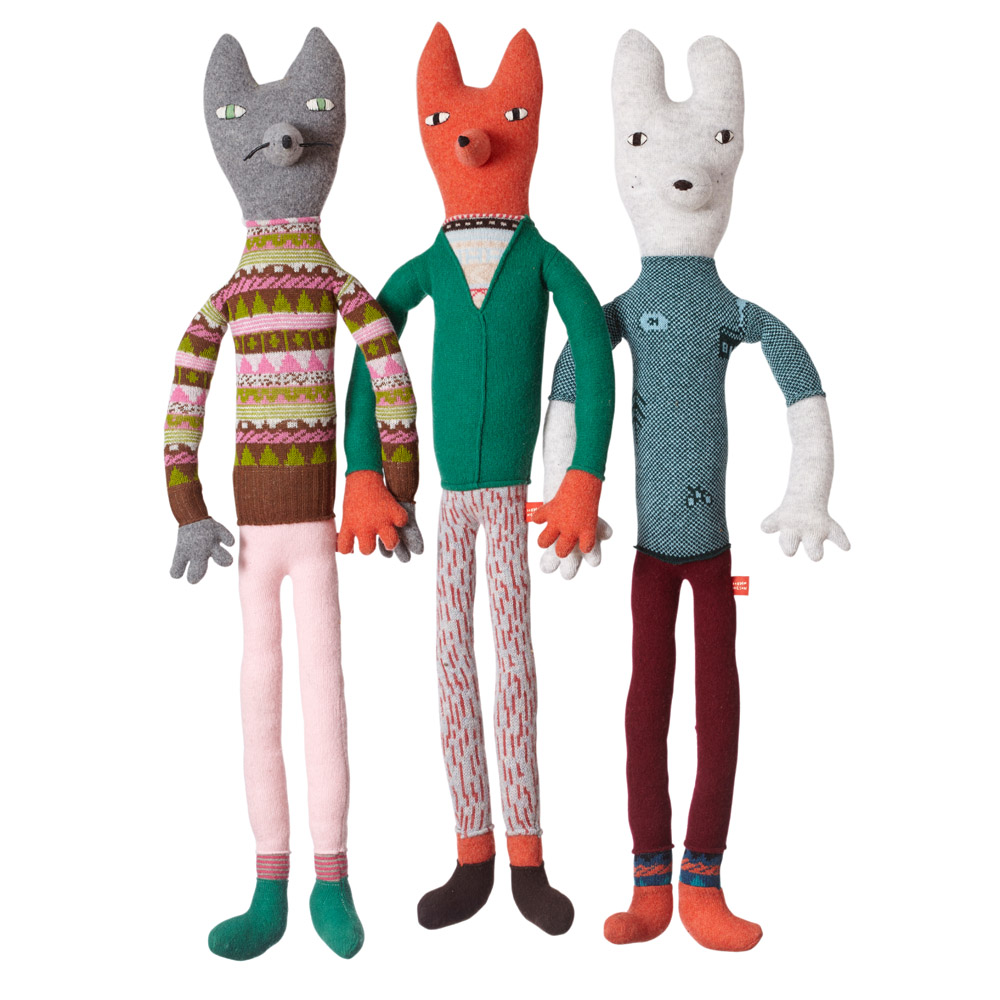
One designer/maker who has succeeded in building stories, both in the way she makes and develops her work and also in the pieces she creates, is Donna Wilson. She builds collections of knitted, printed and woven textile.based products, retaining the craftsmanship she has become known for, while adding to the narrative through the animals and strange creatures that appear in her work.
Her goal is to build work that people will connect with, whether through the connection with the making or through connections with the fun characters in her work.
“Passionate about creating products that people can connect with, the studio is committed to making things that our customers will treasure. We use UK based manufacturers and suppliers wherever possible, doing out bit to keep craftsmanship alive” -Donna Wilson
Narrative of making can be a very successful marketing technique because the build on the concept of authenticity and originality, and create closer bonds with their consumers.
Yes I believe there is a demand for hand-made objects, and one of the reasons why consumers might prefer to by hand-made pieces of work is because they typically are more unique and almost “one-of-a-kind” pieces that you wouldn’t be able to find anywhere else which is a lot unique then buying the same Billy bookshelf from IKEA.
As well as, in the recent years consumers have liked knowing a lot more about where their products are coming from and how they are being made to be sure that they aren’t supporting a company that doesn’t treat their workers well.
Yes I agree with Justin McGuirk when he states that we as a society are in a ‘post-industrial nostalgia for the pre-industrial’ because nowadays people do prefer more quality based products that’ll last a long time and that are unique and different then other products in other people’s lives, as well as as McGuirk states it gives the consumer great nostalgia to have hand-made items in their homes.
Some may say that hand-made products are indeed luxury items because of their unique and almost antique style that makes them stand out from mass-produced products, however others would say that luxury items only come from luxury well-known famous brands, and hand-made products are trashy or ugly.
Creating textiles not only involves the careful consideration of materials and processes, it involved craftsmanship in order to attain the standards of finish the the consumer desires.
A growing moment has sought ‘hand-made’ qualities, authenticity and evidence of the maker’s hand that is not apparent in perfectly manufactured goods.
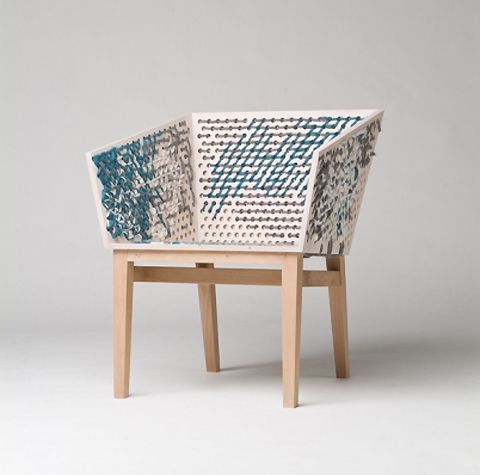
Handmade rocking chair (adds more character)
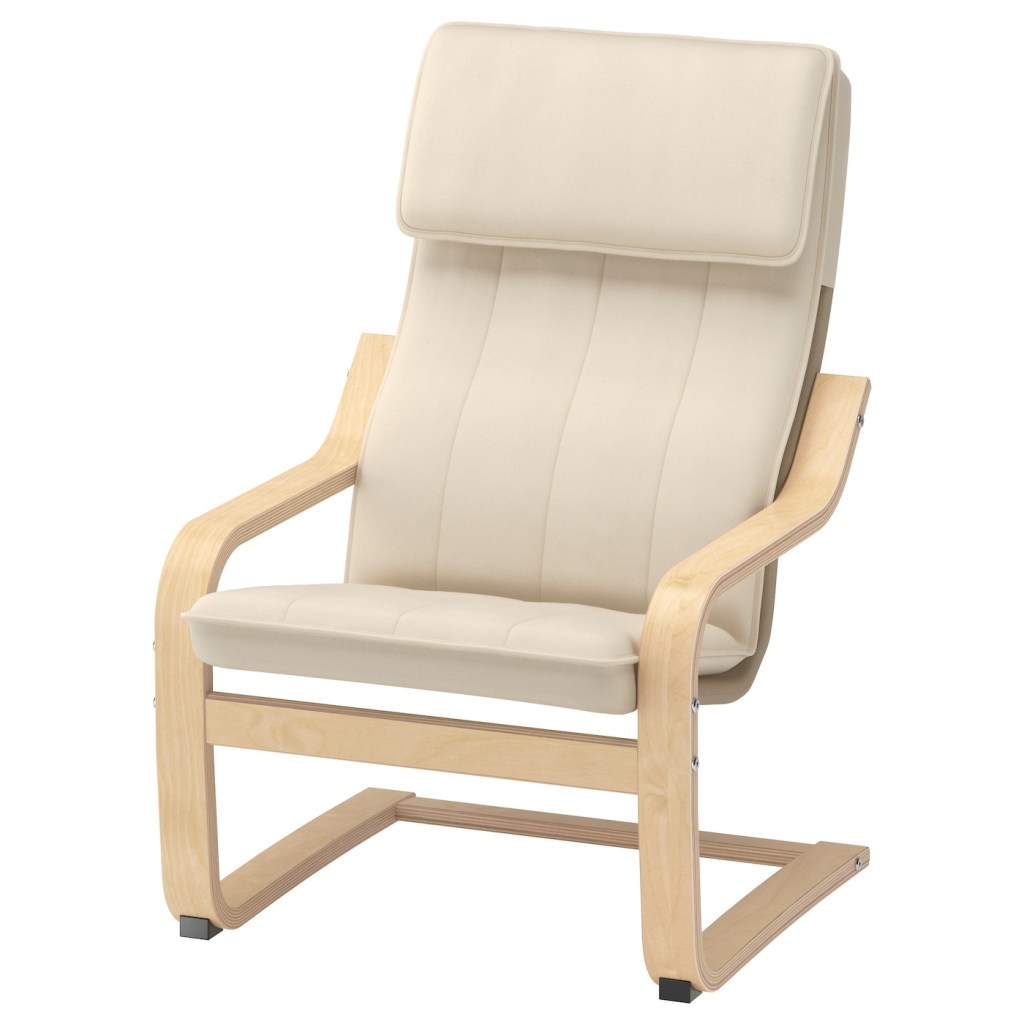
Chair you can by from Ikea as a manufactured piece of perfection
Hand-made qualities is also about the process of how it was made, and the tools that were used not just the finished product. Presenting the methods of making clearly and transparently seeks to build the story of the product, its origins and the rigorous and thought-through approach taken in its making.
The overarching goal of Slow Design is to promote well-being for individuals, society, and the environment. Slow Design seeks a holistic approach to designing that takes into consideration a wide range of material and social factors, and the short and long term impacts of the design.
Slow Design is seen as the next step in the development of sustainable design, balancing individual, socio-cultural, and environmental needs.
There are 6 Core Principles of Slow Design:
Principle 1: Reveal
Slow Design reveals over-looked spaces, experiences, materials, and processes in the day to day life. “Think beyond perceived functionality, physical attributes and lifespans to consider artefact’s real and potential expressions.”
Principle 2: Expand
We should consider aspects beyond space and aesthetics, instead pay more attention to the interactions that take place between human beings, objects and space.
Principle 3: Reflect
Slow Design induces contemplation, and ‘reflective consumption.’ Designers are questioning not only ecological values, but also perceptual and emotional experiences that the unique material can deliver. “They encourage designers to create with wellbeing in mind, and emphasise ephemeral beauty that reminds us that everything is transient and short-lived.”
Principle 4: Engage
Slow Design’s process is “open source” and collaborative, relying on sharing, co-operation and full transparency on all information. Design charrattes are very important for collaboration and to show full transparency. charratte: a public meeting or workshop devoted to a concerted effort to solve a problem or plan the design of something.
Principle 5: Participate
It encourages people to be more active in the design process, embracing ideas of conviviality, and exchange to foster social accountability and enhance communities. Many clients who are about to tae part of the design process, are usually more satisfied with the end result.
Principle 6: Evolve
Slow design recognises that richer experiences can emerge from the dynamic maturation of artifacts and environments over time. This means looking ahead, evaluating processes and outcomes that are most reliable and needed for a better future, and becoming agents of both preservation and transformation.
In my opinion slow design could definitely have a positive impact on our consumption of products, and our wellbeing, however this movement hasn’t yet reached the design of mass consumer products.
Yes I would place more value on a product that was made with these principles because it seems more personal and more connected, as well as the way it was made is a lot better for the environment and would cause less problems to the earth. I was also enjoy that I would be able to have a say and be able to participate in the making of the piece, as the client.








 OCA Art Blog