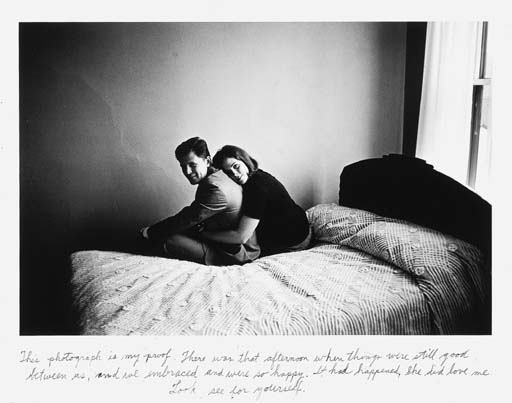
Fig.1. This photographs is my proof. There was that afternoon, when things were still good between us, and she embraced me, and we were so happy. It did happen, she did love me. Look see for yourself!’ (1967) 
Fig.2. Dr.Heisenberg’s Mirror of Uncertainty (1998)
What is it about Duane Michals’ photography that makes it so irresistibly insightful, and why does he chose to portray his work in this way? Duane Michals’ photography immediately stood out because of the way it’s done, and the uniqueness of his style. Michals is an American photographer who creates photo-sequences often to exhibit emotion. His pieces combine photographs with handwritten texts which expand on the meaning of the piece. It is a very absurd way to do photography, as art is always seen as it’s meant to speak for itself and not require explanation or description, however Michals throws that concept entirely out of the window with his work. He plays with the concept of photography, by the way he combines his photos with large amounts of texts, and even creates small stories with some of his pieces. It is a form of photography that can evoke the audience to ask different types of questions they wouldn’t have even come across if the text or image wasn’t present.
Michals’ photography is very specific, yet each image is completely different to each other, and all seem to tell a story. Although the concept of photography is to have one dominant photo telling the whole story, Michals prefers to have multiple photo sequences, or even small handwritten sentences/poems at the bottom of his photos, by doing this he has blurred the lines between photography, and other disciplines (FundaciónMapFre, 2017). He’s always considered himself a bit of a storyteller in that sense (DC Moore Gallery, 2014-2015). The majority of Michals’ images are taken in black and white, and aren’t done on big oversized canvases. They are usually made on standard 8×10 inch. (20×25 cm) canvases, however his images still radiate substance and energy, even without the big splash-of-colour pieces (Vargo, 2014) . The amount of text varies from piece to piece, however most of them have a small description or commentary, enriching the image and giving though-provoking ideas for the viewer to dwell on. His images are fairly simple, however once you add the text they truly come to life, and with the little bit of information given, he opens up the viewers mind to a multitude of perspectives. His philosophy is “My pictures are more about questions, not answers,” (Strecker, s.d.) which rains truth when looking at both Fig.1. and 2 because of the way it creates so many unknown possible outcomes for his audience to imagine in their minds. Duane Michals gives the audience a chance to see his photography, understand what he was photographing, and come up with their own interpretation, as well as question what his interpretation was.
Duane Michals’ photos explore all types of themes and subjects; sex, death, dreams and memory, youth and age, and even subjects of celebrities, and religion (Vargo, 2014)). These are all themes that can either be perceived as quite unusual or very understandable. He states that “photographs should be provocative and not tell you what you already know,”(Strecker, s.d.) which is why he likes to add text to his photos or create photo sequences to try and get the viewer’s mind to work and construct a story of what the photo represents; a concept brought up by David Seidner in an interview with Duane Michals (Seidner, Michals, 1987). In Fig.1. he is seemingly trying to convey an emotional message, and could also have his own personal emotional attachment to the image. The message is written in first person, and is a sad reflective image on a past relationship, it is also handwritten, and the writing is even crooked to make it seem more realistic. His photos can also have text that is scratched out, or uneven, or with hard to read handwriting to make it seem more personal. There could be many meanings behind Fig.2. “Dr.Heisenberg’s Mirror of Uncertainty,” it could be seen as a piece to represent uncertainty and insecurity that has been build into women’s society for decades. However, the photo-sequence was actually made for French Vogue in 1998, as a quantum physics photo-sequence to represent Dr.Heinsenberg’s Uncertainty Principle, it is very interesting how the photo story can speak at so many different levels. (Andreasson, 2015).
Michals’ pieces require both the photograph and image to truly create its uniqueness. If you look at Fig.1. the photo alone is quite simple and not too interesting, but once it’s paired with the text it creates a powerful completed piece. The image is perfectly captured and could create so many questions, as to why it was taken, and if it was staged or naturally taken, however it is a fairly simple image. The text is an emotional piece of writing that could either have been written before the image was taken or after it was taken, which is what adds such intrigue to it. The text gives the audience a chance to view the piece the way that the photographer meant for people to see it, and also gives them a chance to relate to the piece as most people have had at least one heartbreak in their lifetime and could easily understand the situation the man in the image is going through. In Fig.2. the images without the context or text, although very different from other photos, it still would just seem like a model having fun with a funny mirror found in a random second-hand store in Bath (Andreasson, 2015). In cases where he doesn’t use text, e.g. his photo-sequences, the images on their own often don’t mean a lot, but once put together they can reveal a brilliant story. Once you combine both the image and text you create something truly interesting and different that not many photographers could do. Michals’ way of photography makes it necessary to have both the photograph and text to create the right impact.
Duane Michals’ photography style, as previously stated, is unlike many other artists, which is what makes it so captivating. His art is made to create questions, and cause intrigue for the viewer. With the small bit of information Michals’ gives his audience in his photos the viewers are given the opportunity to draw to millions of different conclusions, and reconstruct dozens of different story, they would’ve never thought of if it wasn’t for the way he captures his art.
Word Count (without Bibliography): 1,069
List of References:
Andreasson, K. (2015) ‘Duane Michals best photograph: French Vogue does quantum physics’ In: The Guardian {online} At: https://www.theguardian.com/artanddesign/2015/feb/26/duane-michals-best-photograph-french-vogue-quantum-physics-heisenberg (Accessed on 30/01/20)
Seidner, D., Michals, D., (1987) “BOMB” In: Jstor jstor.org {online} At: https://www.jstor.org/stable/40422740?workspaceshare=true&seq=1#metadata_info_tab_contents (Accessed on 24/03/20)
DC Moore Gallery, (2014-2015) “Storyteller: The Photographs of Duane Michals” At: http://www.dcmooregallery.com/museum-exhibitions/storyteller-the-photographs-of-duane-michals (Accessed on: 26/03/20)
Strecker, A. (s.d) “Book Review, Storyteller: The Photographs of Duane Michals” At: https://www.lensculture.com/articles/duane-michals-storyteller-the-photographs-of-duane-michals-2 (Accessed on: 25/03/20)
Vargo, M. (2014) “Duane Michals: Adventures in Black and White Magic” At: https://entertainmentcentralpittsburgh.com/artistry/duane-michals-adventures-in-black-and-white-magic/(Accessed on: 23/03/20)
FundaciónMapFre (2017) “Duane Michals Exhibition in Barcelona. Fundación MAPFRE Casa Garriga i Nogués Exhibition Hall” At: https://www.fundacionmapfre.org/fundacion/en/exhibitions/historical/2017/photography-duane-michals/ (Accessed on: 25/03/20)
List of Illustrations:
Figure 1. Michals, Duane (1967) This photographs is my proof. {Photograph} At: http://www.1000wordsmag.com/duane-michals/ (Accessed on: 27.01.20)
Figure 2. Michals, Duane (1998) Heisenberg’s Mirror of Uncertainty {Photograph} At: https://www.worldartfoundations.com/waf-content/uploads/2017/05/unnamed-5-1.jpg (Accessed on: 01.02.20)
 OCA Art Blog
